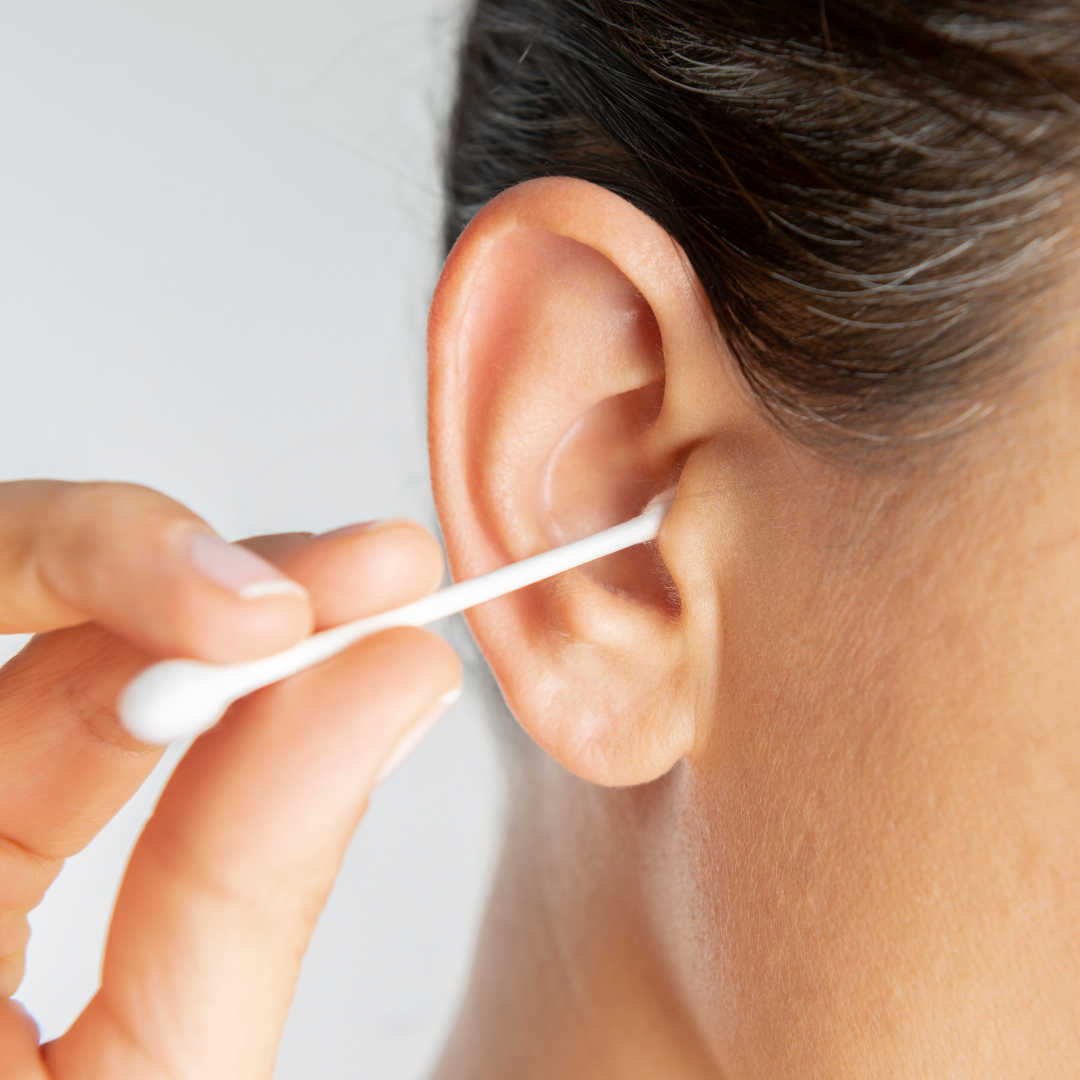
Even though cotton swabs seem practical for routine hygiene, probing the inner canal creates deeper impactions and threatens long-term ear health. Our clinic establishes whether cerumen requires physical removal and identifies the safest protocols for your individual ear anatomy. Ear canals typically maintain themselves without assistance; nonetheless, if stubborn buildup develops, we help individuals safely eliminate excess wax.
What Makes Q-Tips Harmful to Ear Health?
In audiology, earwax (cerumen) is recognized as a vital protective substance rather than dirt. Cerumen works to entrap airborne particles, deter infectious pathogens, hydrate the auditory canal, and protect thin dermal layers. Routine chewing and epithelial cell migration continuously transport spent wax toward the concha, where it falls out or clears during bathing.
A Q-Tip placed inside the canal can disrupt this self-cleaning process. Although the cotton may collect a small amount of wax, it often pushes the remaining material closer to the eardrum. Frequent swab use consolidates soft wax into a rigid barrier, generating an uncomfortable plugged sensation that fosters continuous overcleaning.
Swabs can be safely applied along the outer ear cartilage, but they should never be inserted past the canal aperture.
How Cotton Swabs Cause Physical Trauma to the Ear
The delicate dermal lining of the auditory canal is remarkably thin and susceptible to lacerations. Minor physical scratches induce pain, trigger localized bleeding, and invite bacterial colonization, increasing outer ear infection rates. In addition, the cotton head can loosen and become retained as an obstructing foreign object in the ear.
Common mechanical traumas from swabs include:
- Earwax pushed into a deeper impaction
- Scratches, irritation, swelling, or bleeding
- Infection of the ear canal
- A cotton tip or other material trapped in the ear
- Structural tears or perforations across the eardrum
- Ossicular chain disruption or damage behind the tympanic membrane
- Temporary or permanent hearing changes
- Acute tinnitus, vertigo, or intense otalgia
Serious injuries are uncommon, but they can happen if someone bumps the user’s arm, the swab slips, or it is inserted too far.
Recommended Schedules and Timelines for Cerumen Removal
Most individuals do not need to perform earwax maintenance on a calendar schedule. Normal ears migrate cerumen toward the opening constantly, allowing routine bathing to cleanse the visible exterior. Scrubbing too frequently dehydrates the auditory passage, causes persistent irritation, and raises risks for secondary infections or blockages.
Extraction is medically indicated when cerumen fully occludes the lumen, blocks visual examination of the eardrum, compromises hearing aid function, or induces pain.
Safe Protocols for Managing Cerumen at Home
If earwax is not causing symptoms, leaving it alone is usually the safest option. Clean exclusively around the exterior auricle using a soft, moist cloth, letting the auditory canal clean itself naturally.
When dense wax needs to be softened, we may suggest specialized OTC drops or solutions containing carbamide peroxide, saline, glycerin, or mineral oil. Administer strictly the dosage indicated on the packaging and adhere precisely to the recommended treatment duration. Discontinue administration immediately if the solution sparks pain, severe dizziness, skin rash, or worsening ear fullness.
At-home ear irrigation is not universally safe and requires clinical clearance and technique demonstration from an audiology professional beforehand. Never utilize motorized oral irrigators or dental water devices in the ear canal. Avoid ear candles, metal scoops, camera-guided tools, hairpins, and home suction devices. Such unapproved devices easily burn canal walls, cut fragile skin, puncture the eardrum, or drive cerumen deeper.
When Is Professional Earwax Extraction Necessary?
Schedule an appointment when an ear remains plugged after an appropriate softening treatment, wax appears deeply impacted, or home care repeatedly fails. Direct clinical removal is particularly indicated when a patient cannot remain still, possesses tortuous or narrow canals, uses hearing aids, or has a history of ear surgery.
Request an immediate diagnostic examination for:
- Ear pain, persistent itching, or tenderness
- Visible blood, purulent discharge, clear fluid drainage, or offensive ear odors
- Fever combined with visible swelling or redness around the ear
- New acoustic tinnitus sounds or unstable balance sensations
- Sudden hearing drops or auditory deficits that remain after wax removal
- A suspected perforated eardrum or retained cotton tip
- Persistent impactions interfering with hearing aid operation
Sudden drops in hearing in a single ear require emergency medical attention rather than casual attribution to earwax. Prompt testing can distinguish a blockage from a time-sensitive inner-ear problem.
How Healthcare Providers Extract Impacted Earwax
We always inspect the canal directly using an illuminated otoscope or surgical microscope to confirm cerumen buildup and evaluate for inflammation, injury, or eardrum ruptures. Selecting the optimal extraction technique depends upon cerumen density, canal geometry, patient health history, prior otologic surgeries, and procedural comfort.
Available professional techniques include:
- Application of enzymatic softening drops before or during extraction
- Controlled ear flushing using warm, body-temperature water on intact eardrums
- Low-pressure manual suction under direct high-magnification lighting
- Precision manual debridement using sterile ear curettes, loops, or specialized forceps
Continuous visual monitoring enables the practitioner to navigate around sensitive epithelial tissue and pause immediately if discomfort arises. Utilizing more than one removal technique may be necessary to resolve dry or severely compacted wax. Once the wax is cleared, we reexamine the ear to ensure the auditory canal and eardrum remain completely healthy. Should sensations of fullness, tinnitus, balance issues, or hearing loss persist, comprehensive diagnostic testing will isolate the true underlying etiology.
Book a Professional Earwax Evaluation and Removal
When your ears feel plugged or you notice auditory changes, schedule an appointment with our specialists instead of grabbing a cotton swab. Your scheduled visit includes reviewing active symptoms, past ear procedures, hearing aid status, home management methods, and individual risk factors for cerumen impaction. Get in touch with our team to request a specialized earwax-removal consultation.