For parents bringing home a newborn, realizing their child suffers from hearing impairment tends to spark heavy emotional dread. But the good news is: with early detection and intervention, babies with hearing loss are able to grow and succeed. Beyond doubt, these children can build spoken language, interpersonal skills, and solid relationships across their world, shaping a truly wonderful life!
Combining external hearing aids with targeted cochlear implantation offers two exceptionally successful approaches for guiding infants with hearing loss. Down below, we investigate their underlying operational methods to assist you in deciding which pathway best serves your youngster.
Grasping the Basics of Pediatric Hearing Loss
Auditory loss in newborn babies frequently stems from multiple potential origins, including:
- Specific hereditary genetic markers (even completely lacking any documented parental history)
- Dangerous maternal congenital infections such as cytomegalovirus (CMV) or rubella infection
- Birth-related trauma, featuring neonate oxygen loss or preterm birth
- Particular ototoxic pharmaceuticals applied inside specialized neonatal units
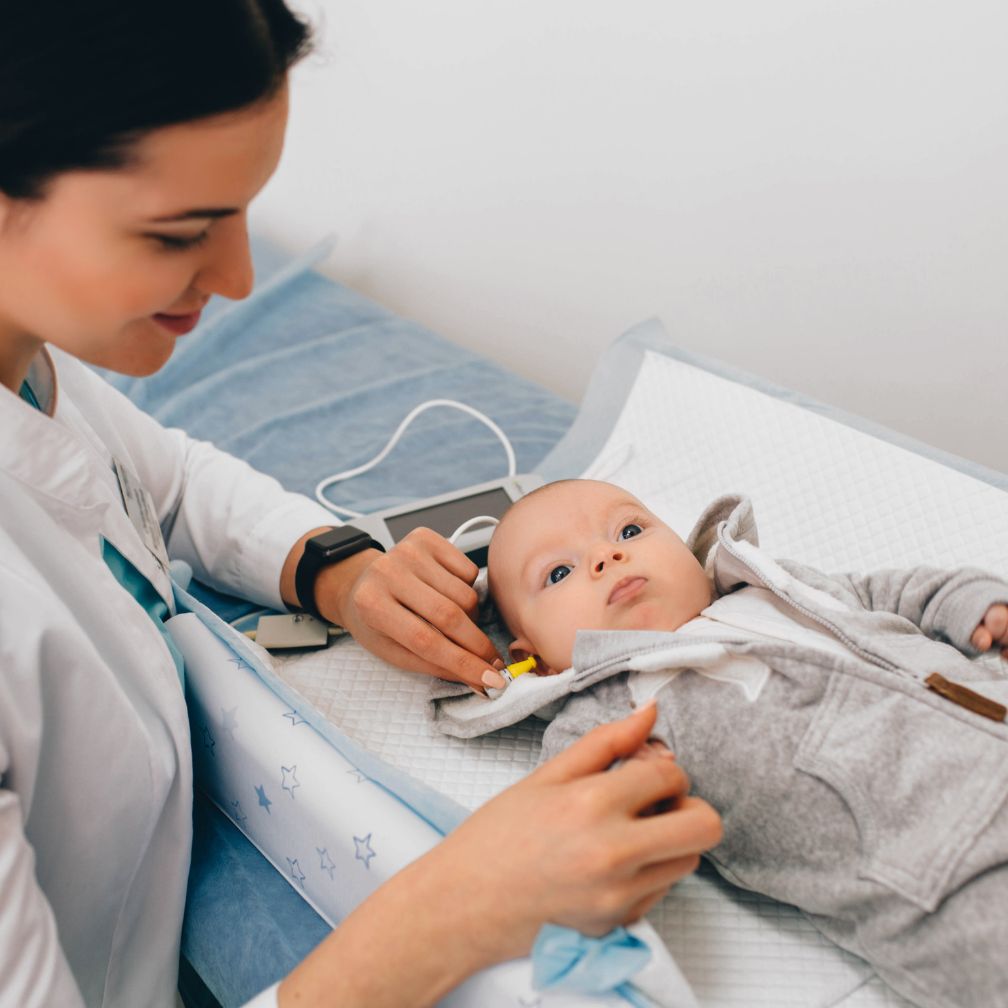
Which measure offers the greatest impact? Rapid diagnostic confirmation. This clinical standard explains why newborns throughout the United States receive hearing evaluations before going home with family. Leading pediatric auditory physicians systematically apply the standard “1-3-6” diagnostic framework:
- Primary hearing check performed prior to 1 month of age
- Comprehensive diagnosis completed within 3 months
- Formal intervention (deploying corrective equipment or speech habilitation) commenced prior to 6 months of age
Meeting these core timeline goals offers infants their highest probability for superior speech, verbal communication, and brain maturation. If you need guidance on these screenings, your primary pediatrician stands ready to assist you!
Hearing Aids for Infants
When infants display mild to severe hearing challenges, custom hearing aids usually act as the initial intervention option. These miniature, wearable instruments elevate acoustic volume, enabling infants to perceive speech and ambient sounds with greater clarity.
Primary hearing aids remain:
- Exceptionally safe for installation on infants only several weeks post-birth
- Designed with pliable, comfortable custom molds that change as the child grows
- Outfitted with child-proof battery covers and dedicated pediatric safety elements
- Individually configured by a certified pediatric audiologist to align with your baby’s exact hearing needs
Throughout early childhood growth, these devices demand ongoing professional tuning to ensure snug placement and precise amplification.
Cochlear Implants for Infants
When an infant presents with profound to severe sensorineural hearing impairment and fails to receive sufficient benefit from standard hearing aids, clinical teams frequently recommend a cochlear implant. Unlike hearing aids, cochlear implants:
- Are integrated into the inner ear through surgery bypassing non-functional outer hair cells
- Directly bypass compromised areas within the cochlear system
- Convert surrounding audio into precise electrical signals that stimulate hearing nerve pathways directly
Advanced cochlear implant devices serve as:
- Clinically approved by the FDA for application in babies starting at 9-12 months of age
- Uniquely successful when paired with early intervention and dedicated household support
- Recommended exclusively following detailed multi-disciplinary testing performed by an audiologist alongside an ENT physician
This evaluative framework encompasses neuroimaging scans, detailed hearing tests, and detailed consultations regarding anticipated long-term progress.
Contrasting Hearing Aids with Cochlear Implants
- Mild to severe hearing loss relies on Hearing Aids; Severe to profound levels of loss demand Cochlear Implants
- Non-Invasive external placement: Hearing Aids; Invasive surgical placement: Cochlear Implants
- Standard sound amplification logic: Hearing Aids; Direct electrical signal generation: Cochlear Implants
- Usage can begin in early infancy: Hearing Aids; Procedure starts at 9-12 months: Cochlear Implants
Final Takeaways: Navigating Infant Hearing Solutions
Should your baby receive a formal hearing loss diagnosis, remember that proven treatment choices and dedicated expert support. With the help of pediatric hearing specialists, numerous children grow to master language skills that are on par with their peers.
No matter if your infant proves better suited for conventional hearing aids or advanced cochlear implants, prompt intervention establishes a foundation for lifelong communicative success.
Have questions about your baby’s hearing health? Contact our clinical team today to receive a complete diagnostic assessment and personalized rehabilitation plan.